A cruise ship can carry thousands of passengers and crew. Bringing one safely into port requires careful coordination among the ship's bridge team, harbor pilots, and the tug operators assisting the vessel.
For tug operators, the challenges are considerable. Working alongside a vessel many times the size of their own, they must account for its momentum, the effects of wind and current, and the limited space available to maneuver. Even small changes in positioning or timing can have significant consequences.
And while assisting any large commercial vessel carries substantial responsibility, cruise ships present an additional consideration: the safety of thousands of people on board.
With so much at stake, how do tug operators prepare for this responsibility?
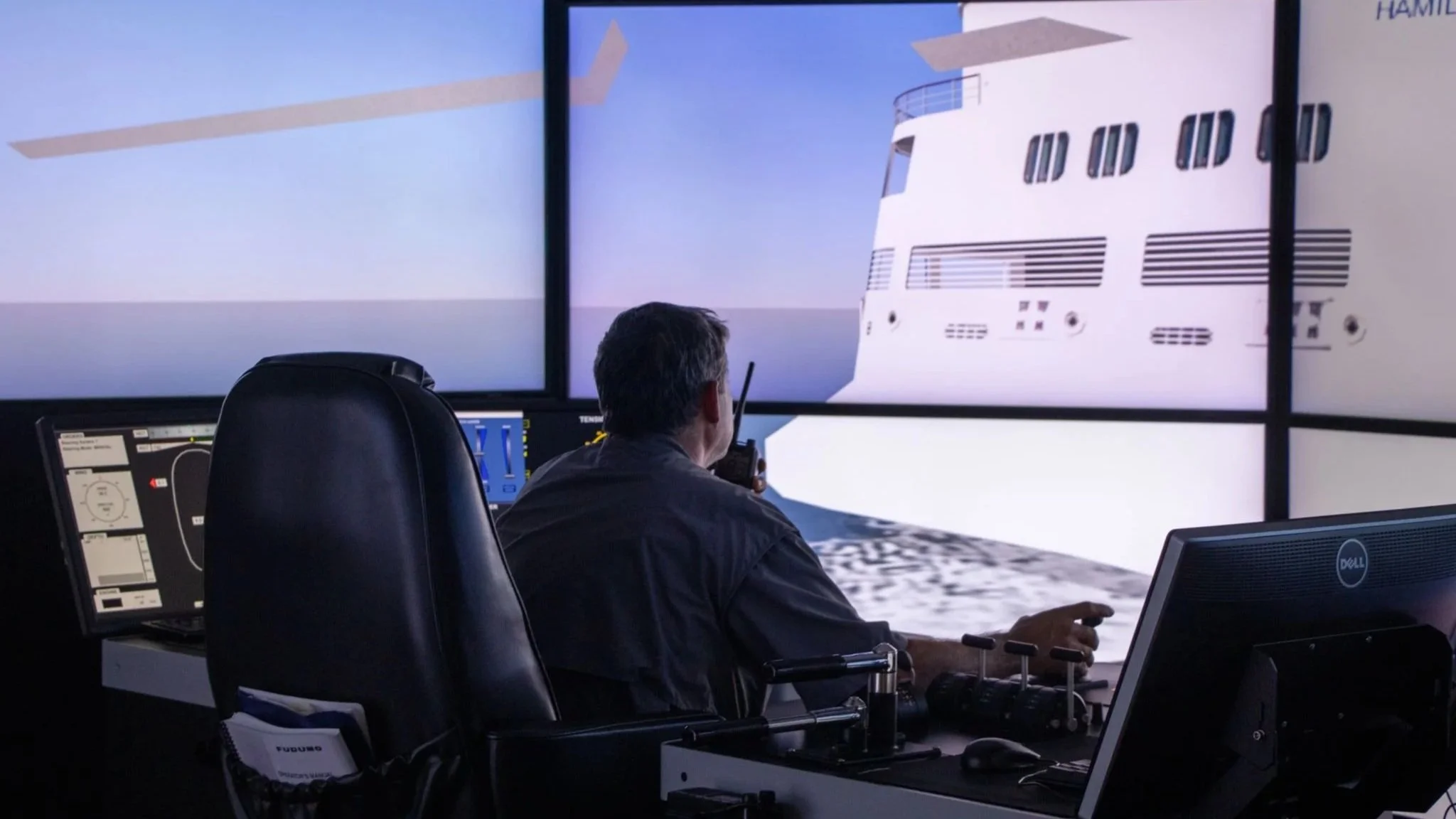
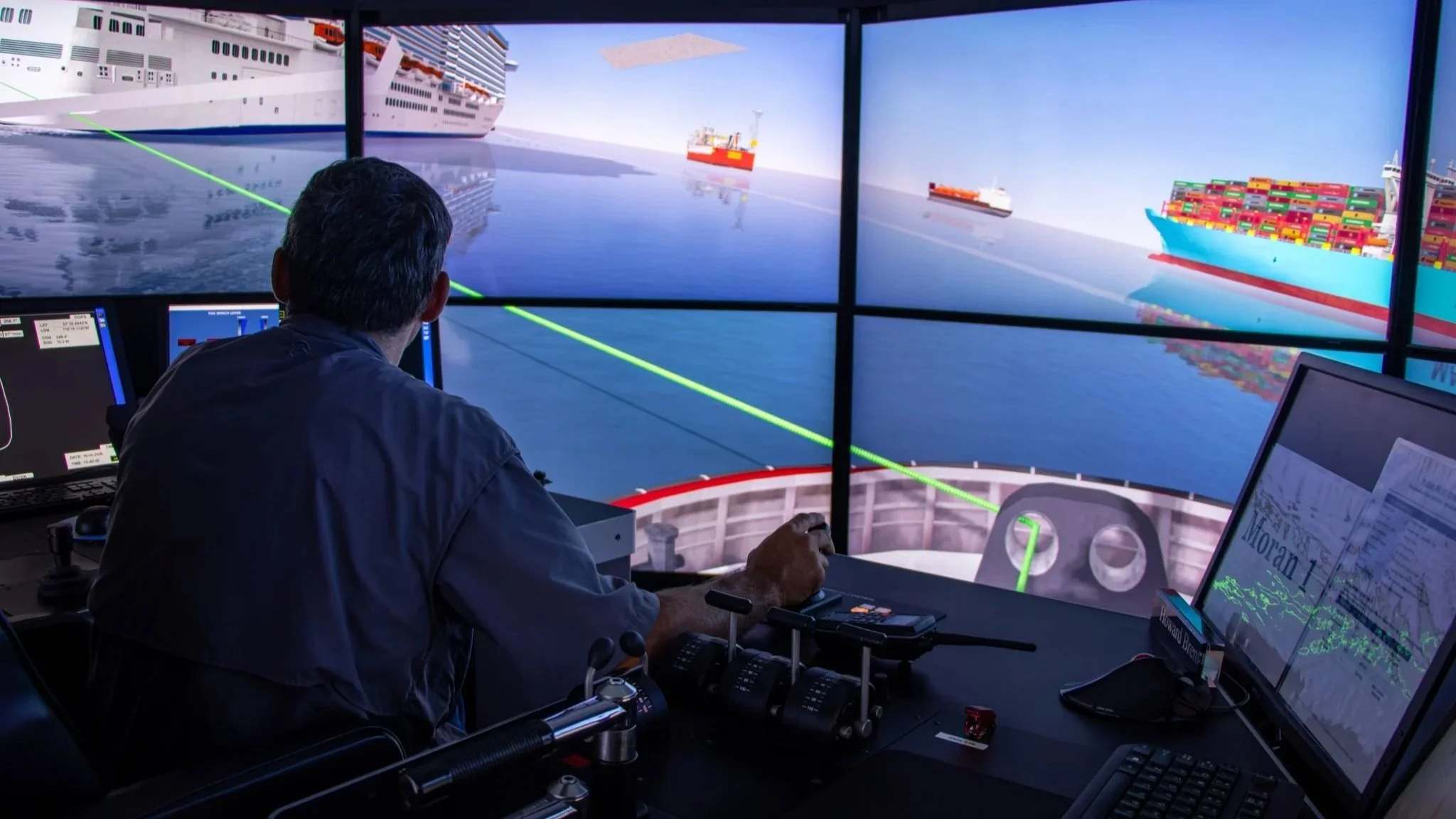
Recently, the Seamen's Church Institute's (SCI) Center for Maritime Education (CME) conducted simulator training involving tug operations alongside a large cruise ship, a less common scenario for a center that more regularly trains mariners working with cargo ships and tankers.
The accompanying images offer a tug operator's perspective during the simulated exercise, illustrating the remarkable difference in scale between the two vessels and the precision required to work safely in such close proximity.
CME's high-fidelity simulators allow tug operators to practice challenging maneuvers, strengthen communication, and sharpen their decision-making skills under realistic conditions, without placing vessels or the people aboard them at risk. It's an opportunity to build experience and prepare for situations where there may be little room for error.
Whether assisting a tanker, cargo ship, or passenger vessel, tug operators carry significant responsibility. Their ability to respond effectively when it matters most depends on the quality of their training, their judgment, and their coordination with others.
Behind every safe arrival is a team of skilled maritime professionals whose preparation begins long before a vessel enters port. It's a reminder that rigorous training is not simply about improving performance. It's about protecting lives and ensuring that everyone aboard reaches their destination safely.